
Do You Have This Habit?
January 13, 2011 by Quantum Publisher
Filed under BEST POSTS, Feeling Positive, Quantum Library
 Ever wonder WHY you do what you do? It’s a habit!

It’s a HABIT!
An estimated 95% of our actions and thoughts are just a habitual and unconscious.
Initially we form a habit because something worked for us in a certain situation. But that’s no guarantee that habit is perfect for what’s happening in your life today.
If you find you’re running into the same challenge again and again in some area of your life – you may have habitual thoughts and actions you should consider changing!
Is a Habit in Control?
It’s easy to assume we have no control over our habits. But a habit CAN be replaced with a more desirable behavior.
- Start by increasing your awareness of the habitual action.
- Begin to notice when you “automatically” respond with anger or frustration to something in your relationship.
- Then start to consciously practice a new, more positive habit to responding better to that situation.
The old habit will gradually weaken as you replace it with a more conscious response – rather than an old “knee-jerk habitual reaction.”
Build a Success Habit
Dr Jill Ammon-Wexler, doctor of psychology and pioneer brain trainer, tells us it takes three weeks to a month to change a habit for a reason. Only at that point has your new habit been cemented into your brain as a long-term memory. Here’s a great solution to building a success habit!
Posted by Jill Ammon-Wexler
Amazing Solutions
Good News – Pay It Forward Happening
November 22, 2010 by Quantum Publisher
Filed under BEST POSTS, Feeling Positive
 Here’s some good news…
Dr. Jill here from The Self Growth Planet. Did you see the movie *Pay It Forward* with Kevin Spacey and Helen Hunt –or did you read the book? Well although a decade has passed, it seems like the movement is still alive and well. And that’s really good news!
Real Live Good News
The *Pay It Forward* concept is to reach out and help a stranger, expecting only that they will do the same for someone else. The good news is — this great idea of performing unsolicited acts of kindness has actually surfaced as a social movement in the sweet little seaside town of Nanaimo, British Columbia [located on Vancouver Island.]
According to one well-known Nanaimo resident, he got to the window at Tim Horton’s to pay for his cup of coffee, but the cashier told him that the customer before him had already paid for his coffee. When he then told the sales girl that he would then pay for the next person behind him, she told him he was the fourth consecutive person to do this.
That stirred up his interest. He asked the girl if anyone at the restaurant had kept track of such spontaneous acts of kindness. One of the employees shared even more good news — he was aware of 30 people in a row on one day.
It seems that in the midst of all the gloom and doom we get from the news media lately, caring for your neighbor is still alive and well. Hurrah.
Let’s Keep This Good News Going!
How about passing this good news along to your friends and Facebook pals. Let’s keep this friendly good news movement going.
 PINEAL GLAND & THIRD EYE: Proven Methods to Develop your higher self
By Dr. Jill Ammon-Wexler
There is now very real scientific proof that your pineal gland truly IS a third eye. Read More Here!
posted by Jill Ammon-Wexler
Amazing Success
An Unusual Way to Boost Your Immunity
October 6, 2010 by Quantum Publisher
Filed under Feeling Positive, Life Mastery
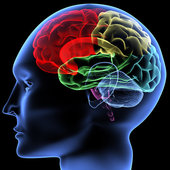 Would you imagine that just looking at a sick person could protect YOU against illness by boosting your immunity?
How Is Your Immunity?
We humans seem to have a natural aversion to those who are ill. When we see someone who looks sick, we experience a powerful emotional response to avoid them. A new Canadian study shows that even *seeing* a sick person can boost your immunity to sickness.
A Natural Immunity Boost
To for possible changes in ones’s immunity, University of British Columbia researchers showed subjects one of two different slide shows—either a slides of people brandishing a gun, or slides of individuals who were obviously sick. To measure any changes in the research subjects immunity, immediately after they drew a blood sample, exposed each sample to bacteria, then measured the levels of a natural substance {interleukin-6 (IL-6)} secreted by white blood cells in response to stress or trauma. Interleukin-6 (IL-6) is a proven indicator of immunity levels.
Although the subjects rated the gun photographs as stressful than the illness images, their subjects blood tests told a different story — the gun images caused a 7 percent increase in IL-6, levels , but the images of sick people caused a 24 percent increase. Their immunity had obviously been boosted by seeing the images of sick people.
“It makes evolutionary sense that the immune system would respond aggressively only when it’s really needed,” said Mark Schaller, a psychologist and co-author of the study. “If I see a bunch of sick people, maybe a big infection is around, and I better kick my immunity into high gear. Many neurochemicals connect the brain to the immune system.”
Learn how to use your brain to=>> boost your immunity!
Posted by Jill Ammon-Wexler
Amazing Solutions