
Unlock Your Deepest Dreams
December 12, 2011 by Quantum Publisher
Filed under Feeling Positive
Comments Off on Unlock Your Deepest Dreams
The Key to Unlocking Your Dreams
Recall how as a kid you dreamed of playing wonderful roles – doctor, lawyer, fireman, hero, maybe even superman or wonder woman! Anything and everything was possible then.
I had a dream for a while of living in a lean-to in the nearby mountains (never did manifest that one.) I also had a dream of being an artist. That one went underground until a friend “tricked” me into discovering my long-submerged painting talent at age 60.
Actually daydreaming is NOT a waste of time, in spite of our childhood teachers scolding us with *wake up and pay attention.*
Daydreaming is a super powerful KEY to truly getting what you most want as an adult. Daydreams in the form of focused visualization can transform your deepest desires to reality.
Do YOU have a dream you want to bring into reality? The first step is to escape the stress and relax down into the Alpha brain state that was so natural for us as kids.
The next step is to carve out a 10 minute slot for a focused visualization of actually *having* what you desire – make your daydream as detailed and real as possible.
The more often you do this, the more convinced your powerful subconscious mind will become – and the more likely it will push you to take the appropriate actions to achieve your dream.
If you’re *really serious* about achieving your dreams, there’s a way to instantly get your brain into Alpha and achieve those dreams like a magician: http://www.SelfGrowthPlanet.com
We’ve got a 1 buck special waiting there for you!
Can a Story Initiate Personal Growth?
December 4, 2011 by Quantum Publisher
Filed under BEST POSTS, Build Mind Power, Creativity, Feeling Positive, Health, Law of Attraction, Life Mastery, Mind Stretch, Prosperity, Success Insights
Comments Off on Can a Story Initiate Personal Growth?
 Did you by chance read The Celestine Prophesy?
If so, did you wonder how that book could end up on the NY Times Bestseller list for three years!
WHY did this happen? Dr Jill Ammon-Wexler here. I have spent years teaching mind power and personal growth to people from around the world — and before that I did the same in a clinical environment in California’s Silicon Valley.
And although I have developed many of the best personal development tools on the web, there is something I must still admin: WE LEARN MORE, AND LEARN MORE DEEPLY, FROM STORIES.
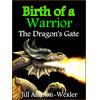
Here is a ell-written adventure fable that, Like Celestine Prophesy, will drop personal transformation right into the back of your mind:
Go read a sample from BOOK of the “Birth of a Warrior: The Dragon’s Gate” click here!
Control Panic Attacks and Anxiety
May 7, 2011 by Quantum Publisher
Filed under Feeling Positive, Health
Comments Off on Control Panic Attacks and Anxiety
 The 20-Second Panic Attack Countdown
Here’s a tip on how to control panic attacks and anxiety attacks by By Barry McDonagh, a man who once had such intense panic attacks he couldn’t leave the house.
Why, I wonder, are top psychologists and doctors still teaching the same old outdated methods for treating general anxiety and panic attacks?
Panic Attack Control Solutions?
It seems every time I do an online search there’s yet another anxiety “expert” talking about controlling anxiety and panic attacks with brown paper bags, by just thinking happy thoughts, with special breathing, etc. I’m sure you have come across them a million times already.
This is silly. How can anyone *solve* an anxiety issue or control a panic attack if they are only exposed to “coping methods.” When it comes to anxiety attacks, just “coping” is not good enough. What’s needed are REAL solutions! I know!
So, I want to share something that DOES work to REALLY control anxiety and panic attacks. It’s a very simple way to help end the fear of having PANIC ATTACKS. This is a very good exercise for people who want something practical to focus their attention on when they feel the pressure of a panic attack building.
It’s very simple and easy to remember. Here goes…
Control Panic Attacks For REAL
Try My 20 Second CountdownSolution: When you feel the sensations of a panic attack building up, do the following to establish control:
Tell the panic it has 20 seconds to initiate a full panic attack. 20 seconds and no more. After the 20 seconds are complete it must stop making empty threats.
You are allowing 20 seconds for it to fully manifest, but not a second more.
Whatever the bodily sensations you fear, they must happen within that 20 second time frame.
• If you heart is going to explode then it has 20 seconds to do so.
• If you are going to lose control, then your mind has 20 seconds to do so.
• If you are going to faint – 20 seconds! But absolutely no more time than that.
You get the picture. By setting a specific time frame for your panic attack, YOU establish boundaries of control. You turn it into a game where YOU call fear’s bluff. If it were in a party poker game, you are asking anxiety to show its hand.
This works because it establishes a sense of control within your mind and body.
You think to yourself, “I’m not prepared to spend my time worrying about controlling my panic attacks. I’ve had enough. I’m going to give it 20 seconds. But after 20 seconds and nothing has happened, then the opportunity has officially passed and I am going to go back to what I was doing.”
Then start counting nice and slow. Do NOT rattle it off as fast as you can. Really tease it out like you did when you were a child and you never wanted to reach zero. Teasing it out is the key, because it allows you to feel generous and that you are giving anxiety every chance possible.
Deep down you DO know there is really nothing to fear.
To really help tease it out, break the last few numbers into fractions.
5…………………………..
4…………………………..
3……………………………
2…and three quarters…
2…and half………………
2…………………………..
1…and three quarters… (last chance anxiety)
1…and half……………… (I really cant wait any longer)
1…………………………..
0.
Sorry — too late. We’ve reached the end.
By not rushing through the countdown you will feel your confidence soar. You are demonstrating real control and authority over your anxious thoughts and bodily sensations. You are saying “Look, I am really trying to give you all the time I can to unleash X,Y, and Z. I am being very generous here with this countdown.
Count your way to freedom. Count your way to confidence.
Click here=> Natural Control of Panic Attacks and Anxiety
Posted by Barry McDonagh
P.S. Let me help you end the vicious cycle of anxiety and panic attacks fast. I’m personal proof that you CAN use natural methods to congtrol panic attacks and general anxiety.
posted by Jill Ammon-Wexler
Amazing Success