
Change Habits Using the Power of the Mind
October 10, 2011 by Quantum Publisher
Filed under Upbeat Ideas
Comments Off on Change Habits Using the Power of the Mind
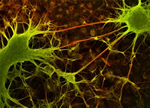 You have approximaely 30 billion neurons, the nerve cells that conduct information throughout your brain and down into your body.
It has been estimated that your brain has 100,000 miles of neural fibers created as your neurons communicate with each other.
How Power of Mind Works. Everything making up your power of mind is stored on such physical neural-pathways. Each time you think a thought, it is communicated among your neurons via tiny electro-chemical messages.
The first time you learn something new, a new neural pathway is created. The next time you have that experience, your brain will follow the same pathway. This is how a thought or action becomes a habit.
Then each time you act out that habit, the more physically durable the neural pathway holding it will become. That is why it is so hard to break a habit. Your habit is wired into your brain as actual physical connections.
Using Mind Power to Change Habits.
If you have habits you would like to change, start by recognizing the fact that you cannot just rationalize them away. You will have to create neural pathways that are stronger that the one you wish to change. Two things create strong neural pathways: Repetition, and intense emotion.
You can use your mind power to change a habit by: (1) Allowing yourself to feel some intense emotion about the habit you want to change, (2) choosing a new positive behavior or thought pattern, (3) associating your new pattern with even stronger positive emotion, (4) rewarding yourself with praise each time you replace the old pattern with the new one, and (5) repeating this as often as possible.
By doing this you are creating physical changes in your brain – rewiring the neural pathways that will change that habit.

The ULTIMATE GOAL ACHIEVEMENT SYSTEM.Personal goal-setting and achievement that works! Success and failure both start in the same place your mind. Overcome the #1 reason most people never achieve their goals. Clarify exactly what you want, and develop an action plan to get it. Want to create a new high self confidence habit? Check this out!
Posted by Dr. Jill Ammon-Wexler
Can You BECOME a Genius?
August 1, 2011 by Quantum Publisher
Filed under BEST POSTS, Mind Power
Comments Off on Can You BECOME a Genius?
 How to BUILD genius mind power
If your IQ is ataverage, hold on to your socks: Genius levels of mental processing ARE within your reach.
John von Neumann, the inventor of th least e computer, estimated that our brains hold two hundred and eighty quintillion bits of memory that’s 280, followed by 18 zeros. But most of today’s neuroscientists feel even this estimate is far too low.
A few short years ago scientists believed geniuses were born with brains that were somehow different from the rest of us. BUT — recent scientific research suggests that genius mind power is more the result of mental training not just genetic superiority.
Even today’s Einstein’s are now seen by neuroscientists as ordinary people who have simply consciously developed extraordinary genius mind power and focus.
How Genius is Developed
We don’t often think of the mind as a tool whose powers can be developed on such a dramatic level. But the good news is there are definite, proven-effective ways to develop your brain’s capacity to express genius mind power.
Modern neuroscientists and brainwave training experts claim that genius-level mental functioning is primarily all about connections.
Which connections? The ever-changing maze of connections among your neurons brain cells. The scientific evidence is this: The more you stimulate and challenge your brain, the more connections it is forced to create to enable your neurons can communicate with one another.
And the more interconnections you have between your brain’s neurons, the closer you move toward genius-level creativity and thinking! It really is primarily that simple.
Einstein’s Secret
As a child, Albert Einstein was seriously dyslexic and had great difficulty with both speech and reading. He was actually expelled from high school and flunked his first college entrance exam, although he finally did manage to complete his bachelor’s degree.
He then took a lowly job in the Swiss patent office. But then when he was only 26, he published his Special Theory of Relativity And sixteen years later he won a Nobel Prize.
Dr. Thomas Harvey, a pathologist on duty at Princeton Hospital when Einstein died in 1955, removed Einstein’s brain. Harvey studied it under a microscope over a 40-year period, but never found any differences from “normal” brains.
But in the early 1980s Dr Marian Diamond, a neuro-anatomist at the University of California at Berkeley, made some interesting discoveries. Her findings about brains in general revolutionized our ideas about what genius really is!
Diamond placed a group of rats in a very stimulating environment with ladders, swings, treadmills, and rat toys. She then confined a control group of rats to bare cages.
The rats in the stimulating environment lived to advanced ages the equivalent of 90 for mankind. But even more remarkable, Diamond found their brains had grown an amazing number of new connections between their neurons.
She had discovered the first hard evidence that higher intelligence could be created through mentally-stimulating exercise. And then when she examined sections of Einstein’s brain, she made the remarkable discovery that it WAS different from the average brain in one way. Like her super-stimulated rats, Einstein’s brain also had an unusually high number of experience-based neural interconnections.
Our brains can continue to grow in complexity right up to a very advanced age. Each challenge you present to your brain causes immediate physical changes no matter what your age.
A Plan of Action
Your brain’s inter-neural connections can potentially increase in number and complexity throughout your life. The more you learn, the more of these pathways you create. And the more you stimulate your brain, the sharper your memory and mental responses. The payoff is immeasurable, and can lead straight to genius mind power.
The most basic way to build genius mind power is to intellectually challenge and exercise your brain. You can create healthy new neural networks by learning a new skill or a second language, or learning to play a musical instrument.

The QUANTUM MIND PROGRAM.A supercharged online training to create the actual brain states of self-achieved people like self-made millionaires in your own brain. An amazing, proven-effective experience.=> MORE INFO!
posted by Jill Ammon-Wexler
Amazing Success
Experience Mental Excellence
November 26, 2010 by Quantum Publisher
Filed under Exceptional Solutions, Mind Power
Comments Off on Experience Mental Excellence
A question for you — Would you consider mental sharpness an important quality?
Dr. Jill Ammon-Wexler here. Everything you think, say or do all starts in the same place — as an electrical signal in your brain called a brainwave. Your past, your present, and your future potential all live in your physical brain — and then express in your mind.
So … is mental sharpness an important thing? Yes, if you want to literally be all you can be!
I have developed a 3-month intensive mind power multi-media training program — The QUANTUM MIND — based on what I have done for over 45 years with my personal clients. The end goal of the program is to guide you in developing the mind power found in such high achievers as elite athletes, self-made millionaires, and remarkable leaders from allwalks of life.
You can learn more here: Click Here to view the video!
Posted by Jill Ammon-Wexler.
Amazing Solutions